• Explore the evolution of AI from task-focused tools to foundation and agentic systems transforming drug discovery and development • Gain practical strategies for building scalable, compliant, and effective AI solutions that accelerate R&D outcomes

• Explore the evolution of AI from task-focused tools to foundation and agentic systems transforming drug discovery and development • Gain practical strategies for building scalable, compliant, and effective AI solutions that accelerate R&D outcomes

Numerion Labs is an AI-native company accelerating the discovery of life-saving medicines through the development and use of cutting-edge ML technologies. The company unites computational chemistry, structural biology, and medicinal chemistry to pioneer the next generation of AI-driven drug discovery platforms.
Key Takeaways:

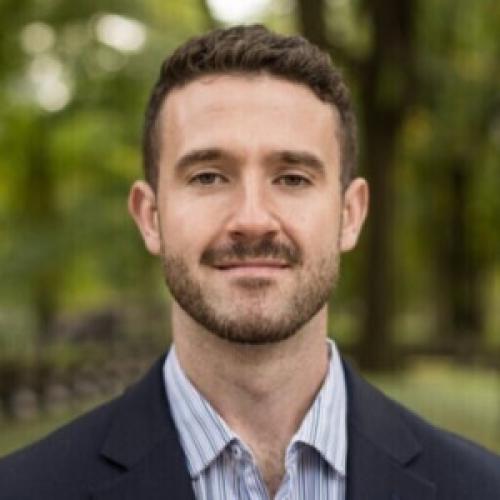
Steve Worland, Ph.D. serves as the CEO of Numerion Labs and has over 30 years of experience in corporate leadership and pharmaceutical R&D. He was previously President, CEO, and Board Member of eFFECTOR Therapeutics, which he co-founded in 2012. Prior to that, he was CEO of Anadys Pharmaceuticals, where he led the company through its acquisition by Roche in 2011. Before becoming CEO, he served as Chief Scientific Officer and President of Pharmaceuticals at Anadys.
Earlier in his career, he held senior positions at Agouron Pharmaceuticals, Warner-Lambert, and Pfizer, where his scientific research contributed to the discovery and development of Paxlovid (nirmatrelvir), Inlyta (axitinib), zotatifin, tomivosertib, and other clinical-stage candidates. At Agouron, he was Vice President and Director of Molecular Biology and Biochemistry, remaining at the company through its acquisitions.
Dr. Worland earned a Ph.D. in Chemistry from the University of California, Berkeley, and completed a postdoctoral fellowship in Molecular Biology at Harvard University as an NIH fellow. He earned a B.S. with Highest Honors in Biological Chemistry from the University of Michigan. He serves on the Board of Directors at Blacksmith Medicines and has previously served on the boards of Tracon Pharmaceuticals, Forge Therapeutics, and GenMark Diagnostics.
Numerion Labs is an AI-native company accelerating the discovery of life-saving medicines through the development and use of cutting-edge ML technologies. The company unites computational chemistry, structural biology, and medicinal chemistry to pioneer the next generation of AI-driven drug discovery platforms.
This session will give an understanding of what it takes to realize the vision of fully integrated and autonomous drug discovery, both from an AI and data generation perspective.

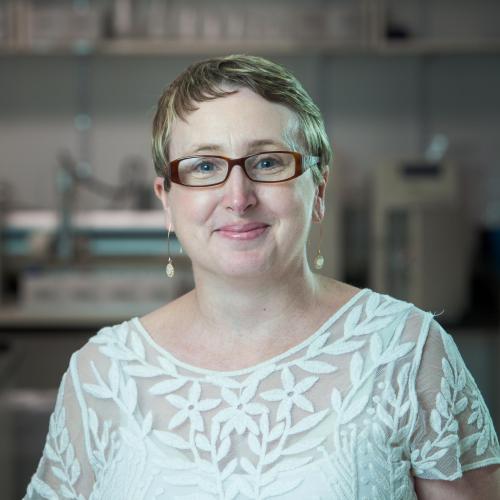
Dr. Melissa (“Mel”) Landon leads Commercial and Business Development for AI and Automation at Millipore Sigma, the Life Science business of Merck KGaA. With 20 years of experience of building cutting edge platforms across pharma and tech, Mel’s current work focuses on scaling intelligent automation and AI solutions that bridge scientific innovation with commercial value. She brings to this role a cross-disciplinary background spanning life sciences, technology partnerships, and enterprise transformation. Prior to joining MilliporeSigma, Melissa served as Chief Strategy Officer at Cyclica, an AI-enabled tech bio company (acquired by Recursion in 2023). Melissa completed her PhD in Bioinformatics at Boston University and performed postdoctoral studies in biochemistry and X-ray crystallography at Brandeis University.
Together with our colleagues, customers and stakeholders, we impact life and health with science. Before researchers can make scientific breakthroughs, they must have access to state-of-the-art tools, services and expertise to perform experiments and engineer new products. That’s where we come in.
We offer one of the broadest portfolios in the industry for scientists, best-in-class products for pharmaceutical development and manufacturing, and a fully integrated service organization to support CDMO and contract testing across traditional and novel modalities.
Our vision is a world where our innovative products, services and digital offerings help create solutions for people globally and a sustainable future for generations to come.
The life science business of Merck KGaA, Darmstadt, Germany, operates as MilliporeSigma in the US and Canada. Merck KGaA, Darmstadt, Germany is a global science and technology company with around 60,000 employees in more than 66 countries.
AI’s potential in clinical research extends beyond scientific data to the operational information that underpins every trial. When harnessed effectively, this data reveals patterns in study design, site performance, and execution that can accelerate development and improve outcomes. This session explores how AI and operational insights can reshape the future of clinical research.

Mike Eckrote is Senior Vice President of Strategic Solutions & Technology at Advarra, where he leads efforts to advance innovative approaches to clinical research and development. He brings more than a decade of experience in real-world data, technology solutions, and clinical trial optimization, with leadership roles spanning HealthVerity, Medable, and Medidata Solutions. Throughout his career, Mike has specialized in applying AI/ML, real-world evidence, and data-driven strategies to improve trial design, site selection, and patient outcomes.
Advarra breaks the silos that impede clinical research, aligning patients, sites, sponsors, and CROs in a connected ecosystem to accelerate trials. Advarra is number one in research review services, a leader in site and sponsor technology, and is trusted by the top 50 global biopharma sponsors, top 20 CROs, and 50,000 site investigators worldwide. Advarra solutions improve collaboration, transparency, and compliance to optimize study design and operations. With unmatched trial operations data, and an ongoing investment in AI innovation, Advarra continues to reimagine what’s possible in clinical research. For more information, visit advarra.com.
The promise of AI in pharma is hindered by fragmented R&D data silos and the infrastructure gap between cloud-native research and on-premise manufacturing. This session presents an architectural blueprint for a unified, hybrid data platform designed to bridge these divides, creating a seamless R&D-to-manufacturing continuum.
We will explore how to first connect R&D data into a powerful knowledge graph. Next, we detail how to compute on this unified data by securely deploying NVIDIA's advanced AI models as microservices within a sovereign cloud environment. Finally, we demonstrate how a true hybrid architecture can bridge the cloud-native lab to the factory floor, unifying CMC and manufacturing data for end-to-end optimization.

Cloudera is a hybrid platform for data, analytics, and AI. With 100x more data under management than other cloud-only vendors, Cloudera empowers global enterprises to transform data of all types, on any public or private cloud, into valuable, trusted insights. Our open data lakehouse delivers scalable and secure data management with portable cloud-native analytics, enabling customers to bring GenAI models to their data while maintaining privacy and ensuring responsible, reliable AI deployments. The world’s largest brands in financial services, insurance, media, manufacturing, and government rely on Cloudera to use their data to solve what once seemed impossible—today and in the future.
At AIDDD 25, Dirk Van Hyfte and Holly Soutter will share insights on reprogramming the entire drug discovery process, presenting the HYFT® breakthrough that enables biology to "compute itself"—making complex biological connections explainable, accessible, and actionable for the first time. This session will explore:

Dirk Van Hyfte stands at the forefront of innovation where artificial intelligence and biology intersect. As Chief Technology Officer of MindWalk, a Bio-Native AI company, Dirk leads transformative research powered by patented HYFT® technology and the LensAI™ platform—cutting-edge tools that unify biological data for accelerated drug discovery and development.
With a degree in Medicine and specialization as a Psychiatrist from the prestigious University of Leuven in Belgium and a PhD in medical artificial intelligence from Nijmegen University, Dirk combines deep clinical knowledge with pioneering expertise in computational science. Dirk’s expertise extends beyond the realms of technology and business. His entrepreneurial vision is reflected in the creation of iKnow, a natural language processing platform acquired by InterSystems, a global data technology leader, in 2010.
Dirk’s leadership has positioned MindWalk as a driving force in explainable and scalable biological AI, moving the field toward an era where biology itself computes, learns, and reveals new therapeutic frontiers.
At AIDDD 25, Dirk Van Hyfte and Holly Soutter will share insights on reprogramming the entire drug discovery process, presenting the HYFT® breakthrough that enables biology to "compute itself"—making complex biological connections explainable, accessible, and actionable for the first time. This session will explore:

Former Director, Lead Discovery and Profiling, Center for the Development of Therapeutics, The Broad Institute of MIT and Harvard
Dr. Holly Soutter is a visionary leader and driving force in the convergence of biotech, pharma, and artificial intelligence, leveraging over two decades of drug discovery expertise. Holly's innovation lies in her ability to strategically unify structural biology, biochemistry, and biophysics with cutting-edge high-throughput screening to generate the high-quality data essential for fueling next-generation machine learning models.
She possesses a clear-eyed vision: that the future of drug discovery is AI-powered, but that success hinges on a "biology-first," hypothesis-driven approach to ML integration. This deep commitment ensures that the technology serves the science, accelerating the path to novel therapies.
While at the Broad Institute, Holly built a legacy of collaboration, working directly with machine learning experts to seamlessly integrate AI tools into hit finding workflows. These pioneering, integrated systems have democratized small molecule discovery, making it accessible to academic researchers worldwide. As the founding co-chair of the Machine Learning in Drug Discovery Symposium, she acts as a crucial nexus, fostering vital connections between experimentalists and ML scientists and attracting luminaries who are defining the next era of medicine.
At AIDDD 25, Dirk Van Hyfte and Holly Soutter will share insights on reprogramming the entire drug discovery process, presenting the HYFT® breakthrough that enables biology to "compute itself"—making complex biological connections explainable, accessible, and actionable for the first time. This session will explore:
MindWalk is a Bio-Native AI company transforming drug discovery and development. Powered by patented HYFT® technology and the LensAI™ platform, MindWalk unifies sequence, structure, function, and literature into a single computational language and closes the loop with an integrated, full-stack wet lab. The platform supports rapid epitope mapping, de novo molecular design, in silico vaccine exploration, and population-scale biologics analytics that help turn insights into validated candidates at speed.

Bharath is inventor of multiple foundational life science technologies at the interface of nanotechnology, systems biology and ML/AI, to extract 100x more information from systems biology than currently possible. He conceived Sensor-integrated Proteome On Chip (SPOC) technology to bridge a big gap in proteomics space, to democratize high-throughput functional protein screening. SPOC is the first and only technology that enables production of 1000s of full-length folded proteins on 1.5 sq-cm biosensor chips, to simultaneously screen for qualitative, quantitative, and kinetic information on protein bindings/interactions in a single assay, at once. Bharath is also the inventor of FENT solid-state nanopore technology for 1000x faster DNA sequencing at 1/10th cost, being developed by iNanoBio Inc. He raised $18M private capital and secured about $8M from DARPA, NIH. Bharath’s vision is to achieve 90% disease preemption, which is to detect and intervene in pre-disease phases, to cure before full disease onset.
SPOC Biosciences’ sensor-integrated proteome on chip (SPOC) synthesizes 192-1152 proteins (full-length, peptides, miniproteins) or antibody (VHH, scFv, Fab) drugs directly on biosensor chips (SPR, MALDI) for library-scale kinetic affinity screening supporting AI-enabled and traditional antibody discovery pipelines. SPOC KinetiKx datasets include on-rate (ka), off-rate (kd), affinity (KD), and residence time (t1/2). SPOC’s proprietary Protein NanoFactory production system utilizes cell-free expression with simultaneous capture-purification directly onto SPR chips, reducing time and cost for library-scale dataset generation compared to traditional recombinant protein workflows. SPOC HyperKinetiKx SPR Product Suite supports antibody drug discovery efforts for affinity ranking (AffiRank), affinity maturation (AffiBoost), epitope binning (EpiScope), epitope mapping (AminoMap) and polyreactivity screening (ReactiScan). SPOC HyperSynaptiKx SPR Product Suite is specifically designed to produce on-demand, large-scale, high-resolution datasets for validation and training in AI-driven drug discovery and development. HyperSynaptiKx SPR assays include lab-in-the-loop services for wet lab testing in DBTL cycles (BuildLoopIQ) and customer-defined antibody vs target library-on-library screening (ContactIQ).